Washout in Washington: BNSF teamwork triumphs in recovery
By JASON LAMERS
Staff Writer
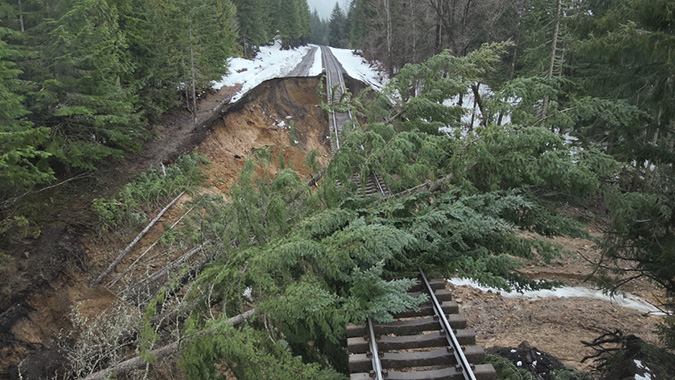
On March 20, extremely wet conditions on BNSF’s line near Snoqualmie Pass in Washington state caused the ground to give way, leaving track suspended above an expansive gorge. It would take days to rebuild what washed away in minutes, but BNSF railroaders quickly rose to the challenge.
The washout was roughly 400 feet wide and more than 60 feet deep. The landslide, caused by overly saturated soil, brought down countless uprooted trees and a stream continued flowing through the base of the slide.
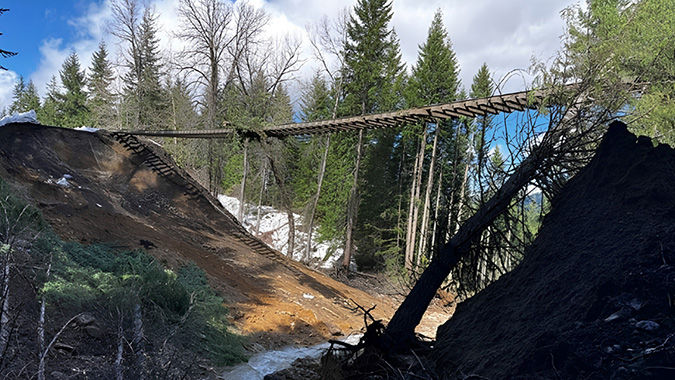
The area was already heavily saturated from recent weather and in the days before the washout, the area received another eight inches of rain. The temperatures had also risen, adding significant snowmelt. Due to these conditions, engineering teams were keeping a close eye on our infrastructure and performing inspections ahead of trains.
“We had been monitoring locations where there was significant rain and snow runoff,” said Kasie Howland, general director of line maintenance. “We started to see some water back up in this area, and teams were bringing in pumps to remove water and protect the culvert. Crews were less than a mile away when they heard a loud noise. They headed to this section of track to find the washout.”
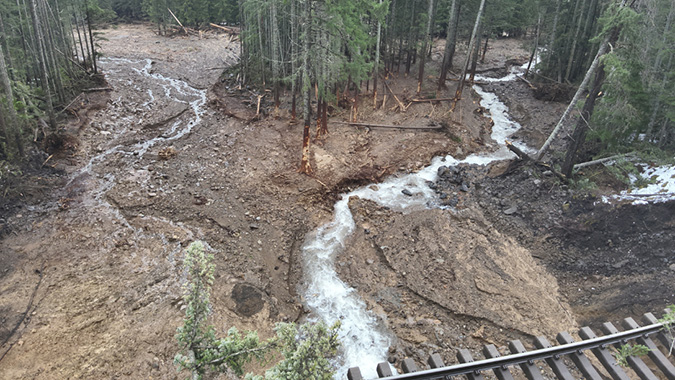
The teams immediately knew restoring service would be a monumental feat. The extremely large washout required hundreds of railcars of rock material to fill the gap. They quickly reported the service interruption and began rerouting inbound trains while setting a recovery plan and mobilizing resources.
“It’s a fairly remote area, and getting equipment and material into the space was going to be a challenge,” Howland explained. “Getting enough machinery, belt trains, air dumps and trucks to haul material was certainly more difficult, but the team on the ground and at headquarters in Fort Worth (Texas) worked hand in hand to safely and successfully work through this.”
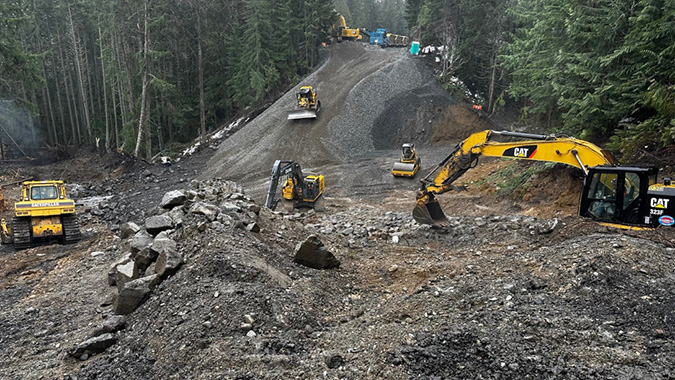
Step one was removing the track that remained intact and hanging over the void. Crews and contractors mobilized heavy equipment to safely do the job. Next, the teams assembled at the creek bed to reroute water back through the existing culvert.
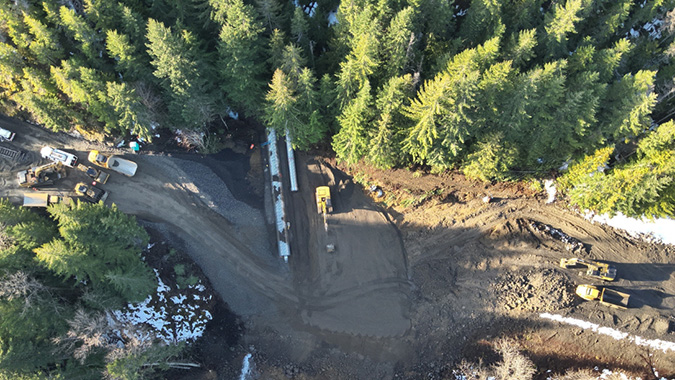
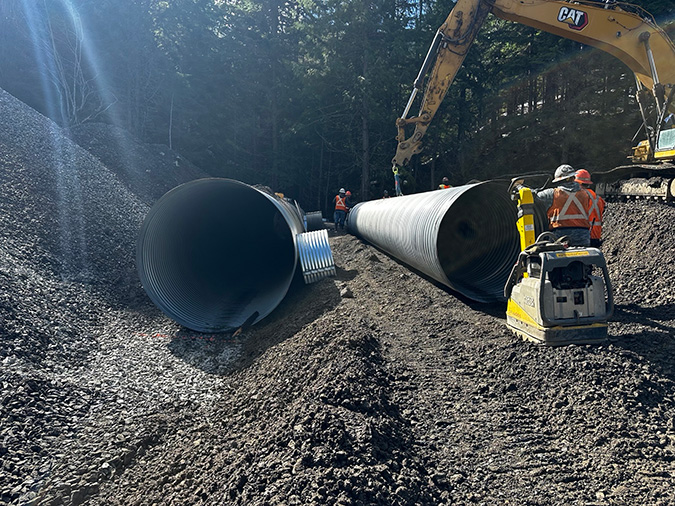
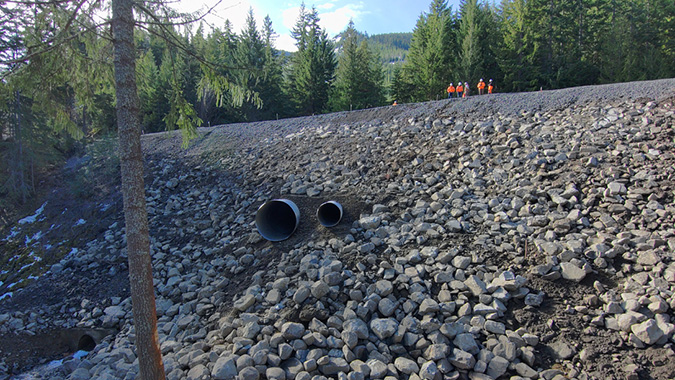
Crews also installed two larger culverts to handle future runoff and reduce the chances of future blockages by debris. They then compacted and buried the culverts, rebuilt the rail grade and prepared the site for new track.
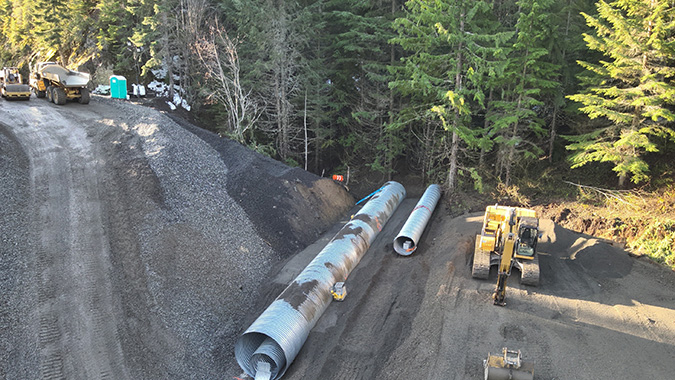
“More than 65,000 net tons of material were delivered to the work site to support the rebuilding effort,” Howland said. “That equates to over 600 ballast (rock) cars of material.”
Thanks to strong collaboration and creative solutions, the material was delivered early, and the route returned to service the evening of March 28. The entire recovery took only eight days — a remarkable feat considering the scale of the washout.
Edmundo Rodriguez, general manager of our Northwest Division, said the successful recovery boils down to professional railroaders and teamwork.
“Such an extraordinary response required numerous departments, teams and partners to get us back on track,” Howland said. “Everyone came together to run the plan — and teamwork made the difference. Incredible work by our professional railroaders. We’re proud of everyone who had a hand in restoring service safely and quickly.”