America250: How BNSF Railway became a vital component of America’s supply chain
By STEPHEN MANNING
Staff writer
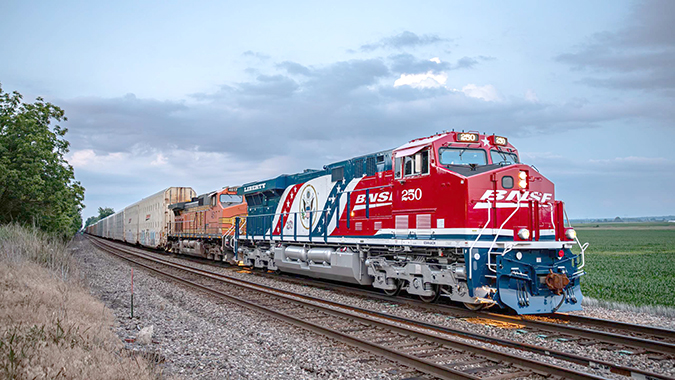
As we celebrate the 250th birthday of the United States this week, it's worth noting that our nation’s transportation infrastructure made and continues to make our economy and way of life possible. A crucial part of that infrastructure is the rail industry, led by America’s premier railroad: BNSF.
Highways and ports get lots of attention. But railroads helped build the country from the ground up, and they remain an essential symbol of the American experience. For BNSF, that story started back when the country was only 73 years old.
Powering the country’s growth
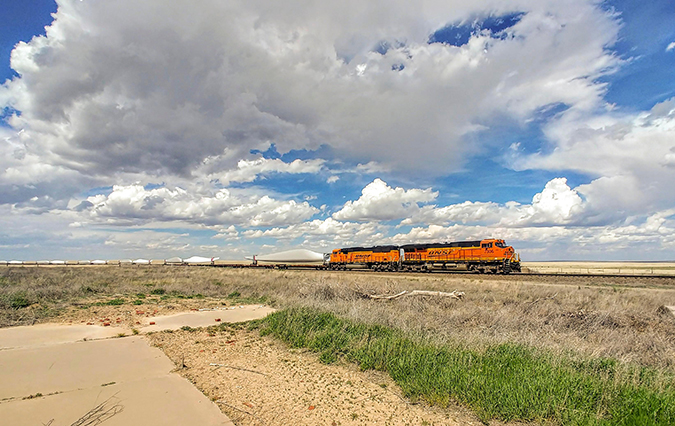
BNSF's oldest predecessor, the Aurora Branch Railroad, was founded in Illinois in 1849. The railroads that eventually became BNSF didn't just follow America's westward expansion; in many ways, they drove it.
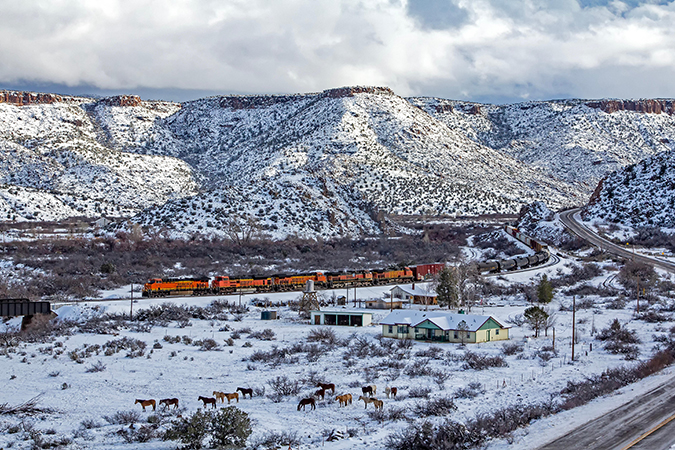
Great Northern Railway (GN) pushed its transcontinental line to Puget Sound in 1893, opening the Pacific Northwest to settlement and trade. The Atchison, Topeka & Santa Fe (ATSF or Santa Fe) laid track along the ancient Santa Fe Trail, connecting the growing Southwest to markets in Chicago and beyond. Northern Pacific (NP) provided the rail corridor that helped new states North Dakota, South Dakota, Montana and Washington with enough settlers to join the Union.
Partnering with American agriculture
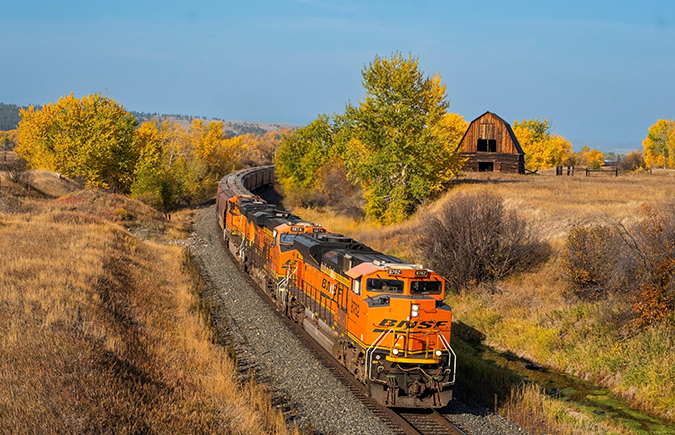
From the 1850s onward, Chicago, Burlington & Quincy (CB&Q) employed agronomists to advise farmers on soil conservation and ran seed and livestock trains across the Midwest.
The Santa Fe transported Mennonite settlers who brought hard red winter wheat seed that made Kansas the nation's breadbasket. GN’s legendary businessman James J. Hill imported purebred livestock and championed diversified farming across his territory. He knew that thriving communities meant a thriving railroad.
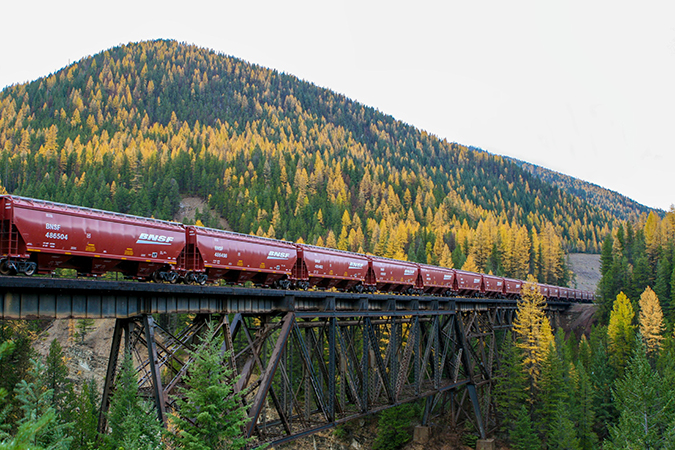
BNSF’s partnership with American agriculture is very much alive today. We’re the largest grain-hauling railroad in the country, moving enough grain each year to supply roughly one billion people with a year's worth of bread. About 80 percent of that volume is moved by our grain shuttles, a dedicated, origin-to-destination service we pioneered. The program has grown from four facilities in 1996 to hundreds across our network today.
The backbone of today’s supply chain
BNSF now operates a 32,500-route-mile network spanning 28 U.S. states and three Canadian provinces, connecting more than 40 ports and 40 intermodal facilities with an average of 1,300 trains per day. Our roughly 35,000 employees keep freight moving around the clock.
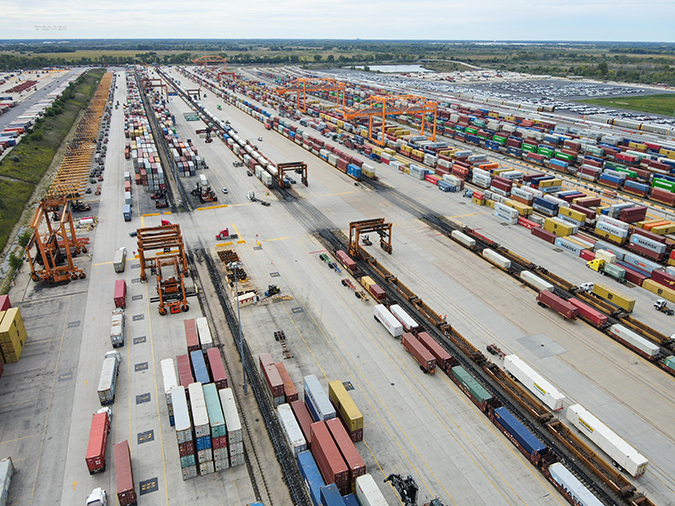
BNSF trains deliver the products Americans count on every day, including grain, lumber, fuel, vehicles, consumer goods and construction materials. Take a look at how much we ship:
- 9.6 million carloads of freight shipped in 2025
- 5.3 million intermodal shipments in 2025 – more than any other North American railroad
- 80 million packages carried during the 2025 holiday season
- Enough lumber each year to frame 330,000 homes
- Enough grain each year to supply 1 billion people with a year's worth of bread
- Enough coal to power nearly 24 million homes for an entire year
- One ton of freight moved nearly 500 miles on a single gallon of diesel – four times more fuel-efficient than highway trucking
For businesses managing complex supply chains, that efficiency brings them lower costs, reduced emissions, and greater resilience. We're not just a carrier. We're a supply chain partner.
Building for the next 250 years
One of our most significant investments on the horizon is the Barstow International Gateway in California, a transformational project that will create one of the most advanced freight hubs in North America.
Located along our Southern Transcon freight superhighway, Barstow will serve as a major transfer and staging hub for cargo moving from West Coast ports into the heart of the country. It will reduce drayage, improve velocity, and give supply chain leaders faster, more reliable access to inland markets.
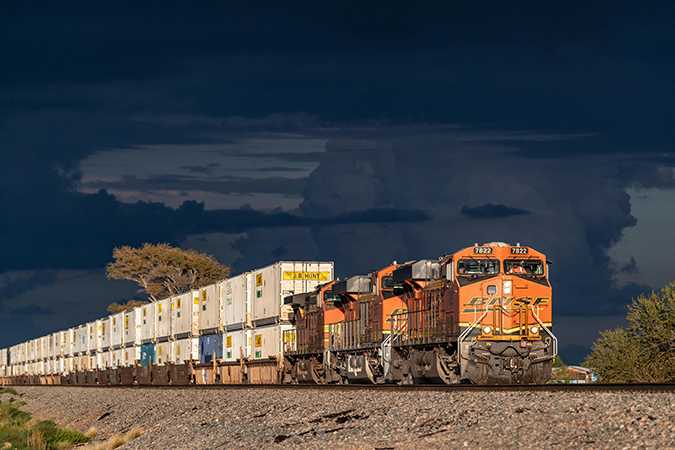
We collaborate with East Coast railroads to provide coast-to-coast connectivity, expanding service and preserving a balanced, customer-focused network. We're also expanding our array of Logistics Centers, shovel-ready, rail-served industrial parks that enable businesses to start rail operations nine to 12 months faster than traditional development.
From Hudson, Colorado, to Gunter, Texas, where we broke ground this past March, these facilities are opening new markets and creating jobs in communities across our network.
BNSF by the numbers
- 32,500 route miles across 28 U.S. states and 3 Canadian provinces
- 35,000 employees
- 1,300+ trains operating per day
- 40+ ports served $3.6 billion in projected 2026 capital investment
- $95 billion invested in our network since 1995
Leading the industry on safety
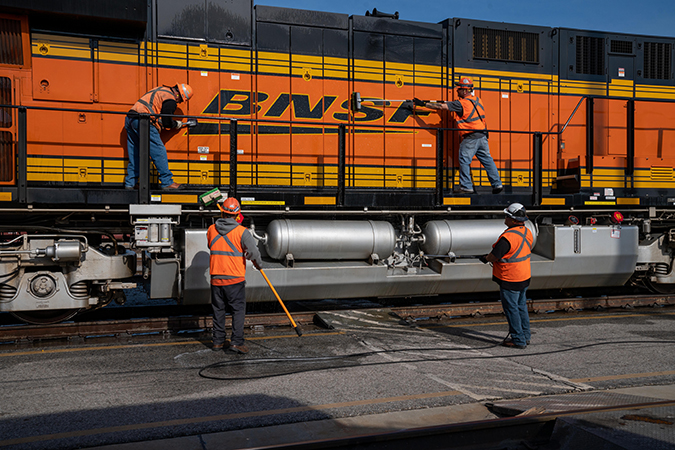
BNSF has long been a safety leader in the railroad industry, and because of our people’s consistent focus and innovation, we continue to improve our safety record while moving more freight. In fact, 2025 was the safest year in BNSF’s history.
Two hundred and fifty years in, America is still growing, still building, still feeding the world. BNSF is still on the job, just as our predecessors were when steam locomotives first rolled across the Illinois prairie 175 years ago. A lot has changed since then, but our mission hasn't: Keep America moving.


